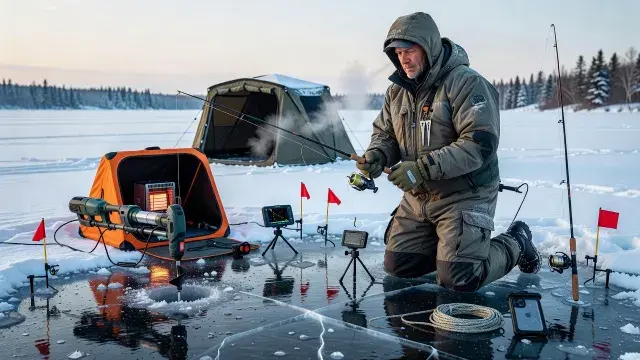
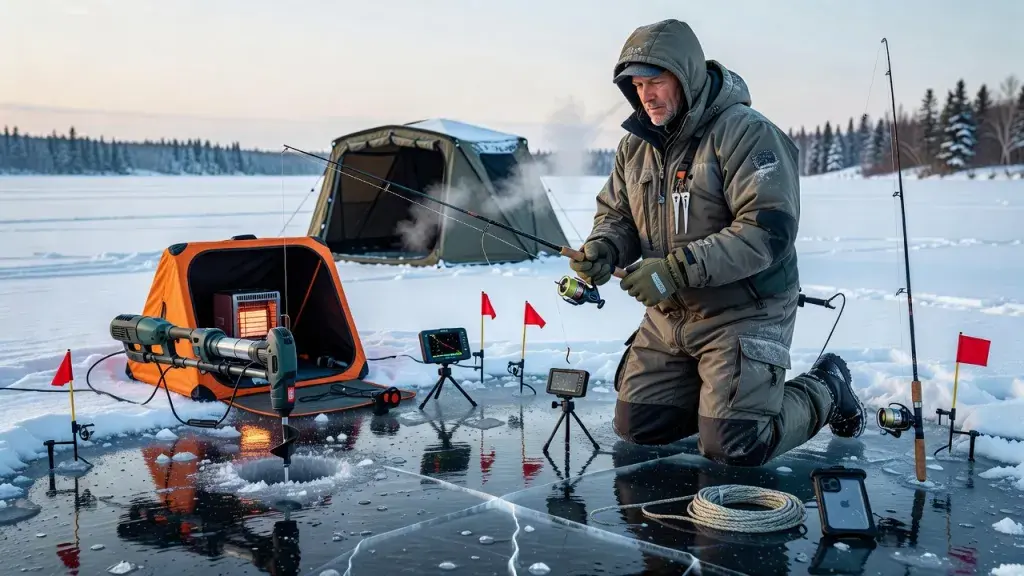
Four inches of clear black ice will support a single angler on foot. Two inches will not, no matter how confident that angler feels. This single measurement separates a productive day on frozen water from a rescue call, and it explains why gear selection and technique matter far more in ice fishing than in almost any other form of angling. The margin for error shrinks the moment you step onto a frozen lake, and the equipment you bring determines whether that margin works for you or against you.
Most people assume ice fishing is a stripped-down version of summer fishing - drop a line, wait, repeat. That assumption falls apart within the first hour on the ice. Rod sensitivity changes in the cold. Line stiffens. Fish behavior shifts entirely once they move into their winter holding patterns. Anglers who treat this as an afterthought usually leave with cold feet and an empty bucket. This ice fishing gear review breaks down what actually works, what's worth the investment, and where beginners waste money. For those who want a lighter, faster way to get a feel for the strategy involved before heading out, an ice fishing review of simulated setups offers a surprisingly useful preview of decision-making patterns anglers rely on in real conditions.
What follows covers the equipment worth buying, the techniques that separate consistent anglers from lucky ones, and the safety practices that keep a hobby from turning into an emergency.
Understanding What Makes Ice Fishing Different
Ice fishing isn't a seasonal variant of open-water fishing - it's a distinct discipline with its own physics, equipment demands, and risk profile. Fish metabolism slows dramatically in cold water, which changes how they feed, how aggressively they strike, and how deep they hold. Understanding these shifts before buying gear prevents the common mistake of applying summer logic to a winter lake.
How Fish Behavior Changes Under Ice
Cold water holds more dissolved oxygen near the surface under ice than many anglers expect, but fish still gravitate toward specific thermal layers depending on species. Panfish often suspend at mid-depths near structure, while predatory species like walleye and pike tend to patrol drop-offs and weed edges at dusk. This behavioral shift is why finesse presentations dominate winter tactics - aggressive retrieves that work in July often spook fish in January.
Why Standard Fishing Gear Fails on Ice
Standard rods are too long for the tight quarters of an ice shelter or hole. Regular fishing line becomes brittle and coils stubbornly in freezing air. Reels seize up when water freezes inside the housing. None of this is a flaw in the equipment - it simply wasn't designed for the environment. This is the core reason a dedicated approach to best ice fishing equipment isn't optional for anyone serious about the sport.
The Learning Curve for Beginners
New anglers typically underestimate two things: how much the cold affects their own dexterity and how much noise travels through ice. Fumbling with frozen zippers or dropping a jig because gloves are too bulky is common in the first few outings. Experienced anglers compensate with gear chosen specifically for cold-weather handling, not just cold-weather fishing.
Ice Fishing Gear Review: Rods, Reels, and Line
The rod-and-reel setup is where most beginners either overspend on unnecessary features or underspend on components that directly affect catch rates. Ice rods are short - usually between 24 and 36 inches - because anglers fish nearly vertically through a hole rather than casting.
Choosing the Right Ice Rod Action
Rod action determines how much you feel a bite and how well you can set the hook without ripping it from a fish's soft mouth. Light and ultralight actions suit panfish, where bites are subtle taps. Medium-heavy actions handle walleye and pike, where a firmer hookset is needed to drive through bonier jaws.
Reel Types and Cold-Weather Reliability
Spinning reels remain the most common choice because they're simple to use with gloved hands. In-line reels have gained ground among panfish specialists because they reduce line twist, a persistent problem with light monofilament in cold conditions. Whichever type you choose, a sealed drag system resists the moisture that causes freeze-ups.
Line Selection: Mono, Fluorocarbon, or Braid
Monofilament remains popular for its manageable stiffness in cold air, but fluorocarbon's near invisibility underwater makes it a strong choice in clear winter lakes where fish are more line-shy. Braided line, while excellent for sensitivity, tends to freeze and tangle unless paired with a fluorocarbon leader.
- Monofilament: forgiving, affordable, slightly visible
- Fluorocarbon: low visibility, higher abrasion resistance, stiffer in extreme cold
- Braid with fluorocarbon leader: maximum sensitivity, requires more maintenance
Essential Ice Fishing Equipment Beyond the Rod
A rod and reel catch fish, but everything else in your gear bag keeps you on the ice long enough to use them. This is where a genuine ice fishing gear review earns its value - separating equipment that solves real problems from accessories that just add weight to your sled.
Augers: Hand, Gas, and Electric
Hand augers work fine for early-season ice under eight inches but become exhausting once ice thickens past a foot. Gas augers cut fast through thick ice but require fuel storage and maintenance. Electric augers, powered by rechargeable batteries, have become the practical middle ground - quiet, low-maintenance, and strong enough for most recreational needs.
Shelters and Staying Warm
Flip-over shelters set up in seconds and suit anglers who move frequently between holes. Hub-style shelters offer more interior space for groups but take longer to pitch and pack. Insulated shelters paired with a portable heater can raise interior temperatures dramatically, extending comfortable fishing time by hours.
Electronics: Flashers, Sonar, and Cameras
A flasher unit shows real-time fish activity beneath the hole, including how a fish reacts to your jig's movement. This immediate feedback loop is arguably the single biggest advantage modern anglers have over those fishing blind a generation ago. Underwater cameras add visual confirmation but work best in clearer water with adequate light.
Tip-Ups for Passive Fishing
Tip-ups let anglers fish multiple holes simultaneously, a legal and common practice in many regions with per-angler line limits. A flag signals a strike, allowing anglers to actively jig one hole while passively monitoring several others - an efficient way to cover more water without more effort.
Ice Fishing Tips for Consistent Catches
Owning the best ice fishing equipment guarantees nothing without the knowledge to use it well. The gap between anglers who catch fish consistently and those who don't usually comes down to a handful of habits.
Reading Ice and Locating Fish Faster
Fish don't distribute evenly under ice. Structure - drop-offs, submerged vegetation, points - concentrates them just as it does in open water. Drilling several test holes early and using electronics to scan each one saves hours of blind fishing in unproductive water.
Bait Selection by Species and Season
Early ice fish are often still aggressive from fall feeding patterns, making larger jigs and live bait effective. Mid-winter fish slow down and respond better to smaller, subtler presentations tipped with wax worms or spikes. Late ice often triggers a second aggressive feeding period as fish prepare for spawning.
Timing Your Trips Around Weather and Light
Stable barometric pressure typically produces more consistent bites than the sharp swings before a storm front. Dawn and dusk remain peak activity windows for most species, though heavily pressured lakes sometimes shift feeding to midday when fewer anglers are present.
Advanced Ice Fishing Techniques
Once the fundamentals are solid, technique refinement is what turns an average season into a memorable one. These ice fishing techniques separate anglers who occasionally get lucky from those who catch fish on demand.
Jigging Rhythms That Trigger Strikes
Aggressive, sharp jigging strokes can call fish in from a distance by generating vibration, but once a fish appears on the flasher, switching to subtle, near-motionless presentation often closes the deal. Reading that transition moment is a skill built through repetition, not shortcuts.
Deadsticking and Combination Setups
Running one rod with an aggressive jigging pattern and a second "dead stick" with a minimally moving bait covers two behavioral triggers at once. Many experienced anglers report that the dead stick - left nearly still - accounts for a disproportionate share of their bites, especially from cautious fish that inspected the jigged bait but didn't commit.
Adjusting Depth Strategically
Fish often hold at a specific depth band rather than sitting on the bottom. Working a jig slowly through the entire water column, pausing at intervals, helps pinpoint that band quickly rather than guessing.
Ice Fishing Safety Guide
No equipment review or technique breakdown matters if the ice itself isn't safe. A thorough ice fishing safety guide isn't a formality - it's the foundation everything else depends on.
Reading Ice Thickness and Conditions
Clear, solid ice supports weight far better than cloudy or slushy ice of the same thickness. A general guideline used by many experienced anglers is roughly four inches for foot travel, five to seven for snowmobiles, and significantly more for any vehicle - but ice thickness can vary drastically across a single lake due to currents, springs, and depth changes.
Essential Safety Gear to Carry
- Ice picks or awls worn around the neck for self-rescue
- A rope at least 50 feet long for assisting others
- A flotation suit or life jacket designed for ice conditions
- A cell phone in a waterproof case
These items are inexpensive relative to the risk they mitigate, and experienced anglers treat them as non-negotiable rather than optional extras.
What to Do If Ice Breaks
If you fall through, resist the instinct to climb straight up onto the same ice that just failed - it will likely break again. Kick your legs horizontally to get your body into a swimming position, use ice picks to grip and pull yourself onto solid ice, then roll away from the hole rather than standing immediately.
Fishing in Groups and Sharing Your Plans
Solo ice fishing carries meaningfully higher risk. Telling someone your location and expected return time, or fishing with at least one partner, means help arrives faster if something goes wrong.
Frequently Asked Questions
How thick does ice need to be before it's safe to fish on?
A commonly used benchmark is around four inches of clear, solid ice for a single angler on foot, though this should be checked in multiple spots since thickness varies across a lake. Cloudy, gray, or slushy ice is weaker than clear ice of the same measured thickness, so visual inspection matters as much as the number itself.
Do I need an electric auger, or is a hand auger good enough?
A hand auger is perfectly adequate for early-season ice under roughly eight inches and costs far less upfront. Once ice thickens beyond that, an electric or gas auger saves significant time and effort, especially if you're drilling multiple holes in a single outing.
What's the biggest mistake beginners make with ice fishing gear?
Beginners often buy a rod that's too long or too stiff, carried over from open-water habits, which reduces sensitivity to the light bites typical in cold water. Pairing a short, light-action rod with appropriately light line makes a noticeably bigger difference than any single high-end accessory.
How do I keep my fishing line from freezing and tangling?
Keep line and reel components dry by wiping down after each hole and storing rods inside a heated shelter when not actively fishing. Applying a small amount of line conditioner designed for cold weather also reduces the stiffness that leads to coiling and tangling.
What should I do if I see someone fall through the ice?
Do not run toward them, since the ice near the break is already compromised. Call for emergency help immediately, then extend a rope, pole, or another object from a safe distance to pull them out rather than approaching directly.
Is ice fishing worth trying for someone with only open-water fishing experience?
Yes - the core skill of reading fish behavior transfers well, but expect a real learning curve around gear handling in the cold and the more finesse-oriented techniques winter fishing demands. Starting with a guided trip or an experienced friend shortens that curve considerably and adds a layer of safety for a first outing.