A roulette wheel spun by a human dealer in a studio thousands of miles away can now feel closer than the slot machine next to you at a physical casino. That proximity isn't an accident. It's the product of camera arrays, low-latency streaming, and rendering engines built specifically to close the distance between a player's screen and a live game floor. The result has quietly restructured what people expect from online gambling.
For years, digital casino games were static: a random number generator, a flat interface, no sense of place. That model still exists, but it's no longer the frontier. Studios now operate multi-camera sets with production teams rivaling small broadcast operations, while separate teams build fully rendered 3D environments where a player's headset becomes the table itself. Anyone curious about the mechanics behind this shift - including what is immersive roulette and how it differs from a standard live stream - will find the distinction matters more than it first appears. One format relies on real dealers and real wheels; the other constructs a synthetic space with its own physics and camera logic.
This piece breaks down how these two approaches - live dealer roulette and virtual reality roulette - actually work, what separates a convincing immersive casino experience from a gimmick, and where interactive roulette gaming is headed as hardware and bandwidth keep improving.
The Shift from Static Screens to Immersive Casino Experience
Online roulette used to mean a digital wheel, a random number generator, and a payout table. Functional, but sterile. The shift toward an immersive casino experience began when operators recognized that trust and enjoyment both increase when players can see a game actually happen, rather than take an algorithm's word for it.
From RNG Tables to Real-Time Broadcasts
Random number generator roulette still exists and still serves a purpose - it's fast, always available, and requires minimal bandwidth. But it strips away the one thing that makes roulette compelling in a physical casino: watching the ball settle into a pocket in real time. Broadcast-based formats reintroduced that moment, turning a math problem back into a spectacle.
Why Player Trust Depends on Visible Mechanics
Seeing a wheel spin, a dealer place a marker, and chips get swept away builds a kind of confidence that a certified RNG algorithm, however fair, cannot replicate visually. Verification badges and audit certificates matter to regulators; visible mechanics matter to players. That psychological difference is why studios invest heavily in camera precision and lighting rather than just backend fairness testing.
Setting Expectations for What's Ahead
The two dominant formats now competing for player attention are live dealer roulette, built on real hardware and human staff, and virtual reality roulette, built on rendered environments and headset interaction. Each solves the "authenticity gap" differently, and each appeals to a different kind of player.
Understanding Live Dealer Roulette Technology
Live dealer roulette is, at its core, a broadcast production problem disguised as a gambling product. The wheel is physical. The dealer is a real employee. What makes it work at scale is the technology stitching the physical table to thousands of simultaneous remote viewers without perceptible lag.
Studio Setup and Camera Systems
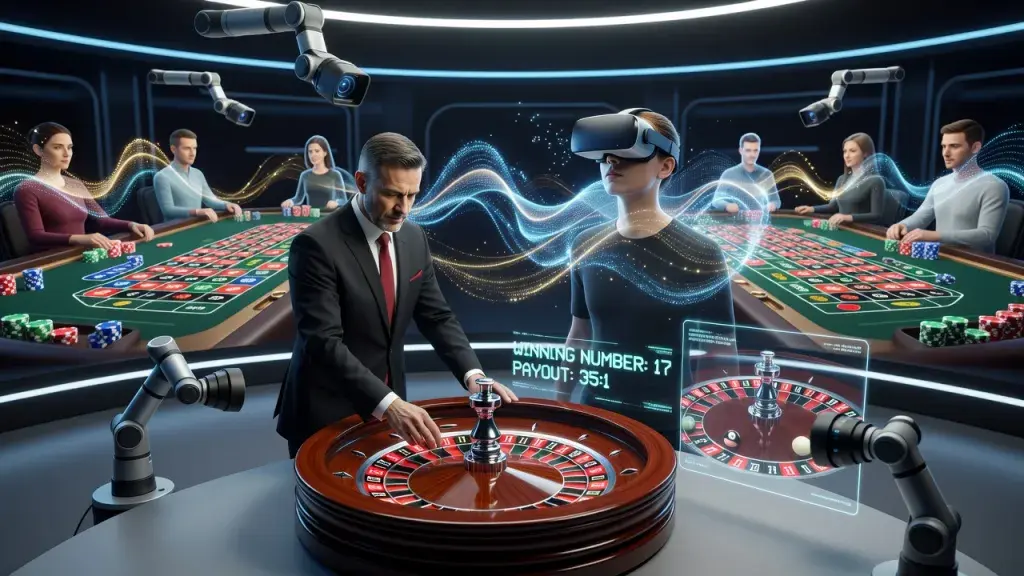
A typical live dealer studio uses multiple synchronized cameras: an overhead angle for the wheel, a close-up on the ball drop, and a wider shot capturing the dealer and table. Optical character recognition software reads the winning number in real time and relays it to every connected client simultaneously, so results appear on screen within a fraction of a second of the ball landing.
Real-Time Streaming and Latency Reduction
Latency is the enemy of trust in this format. If a stream lags behind the actual spin, players start questioning whether outcomes are being manipulated before the video catches up. Providers address this with dedicated content delivery networks, regional server clusters, and adaptive bitrate streaming that adjusts quality to a viewer's connection without freezing the feed.
The Role of Human Dealers in Digital Trust
A human dealer adds accountability that software alone can't replicate. Dealers narrate the game, confirm bets verbally, and follow strict procedural scripts designed to prevent disputes. This human layer is part of why live dealer roulette has become the preferred format for players who distrust purely automated systems, even when those systems are independently certified.
Exploring Virtual Reality Roulette and Its Unique Appeal
Virtual reality roulette takes a different route to the same destination: convincing the player they're somewhere real. Instead of streaming an actual table, it renders one, then lets the player move through it using a headset and motion controllers.
How VR Headsets Recreate the Casino Floor
A rendered casino floor can include ambient sound, other avatar players, moving dealers, and a table that responds to head movement and perspective shift. Because nothing is filmed, developers have creative control over lighting, scale, and detail that a physical studio can't match - a wheel can spin exactly the same way every time, with zero equipment wear or camera obstruction.
Spatial Audio and Depth Perception in Virtual Reality Roulette
Spatial audio is what separates a convincing VR table from a flat one. The clatter of the ball, chip sounds, and ambient chatter are positioned in 3D space relative to the player's head orientation, reinforcing the illusion of physical presence far more effectively than visuals alone.
Avatar Interaction and Social Presence
Multiplayer VR rooms let players see each other's avatars placing bets at the same table, restoring a social dimension that solo RNG games lack entirely. This is arguably where virtual reality roulette pulls ahead of even live dealer formats - it replicates not just the wheel, but the crowd around it.
Interactive Roulette Gaming: Bridging Physical and Digital Play
Between fully live broadcasts and fully rendered VR sits a growing middle ground: interactive roulette gaming, where physical tables are enhanced with digital overlays, statistics panels, and touch-based betting interfaces layered on top of a live feed.
Touchscreen Betting and Real-Time Data Overlays
Modern interfaces let players tap directly on a rendered betting grid superimposed over the live video, track hot and cold numbers, and view historical spin data without leaving the game window. These overlays don't change the underlying wheel mechanics, but they give players tools that a physical casino table never offered.
Multi-Camera Angles Chosen by the Player
Some platforms let viewers switch between camera perspectives - overhead, dealer-facing, or wheel close-up - during a single spin. This small feature has an outsized effect on engagement, since it gives players a sense of control over how they experience a moment they can't otherwise influence.
Chat and Social Features During Live Play
Text chat with dealers and other players adds a layer of interactivity that pure RNG games can't offer. It also creates a moderation challenge, since studios must balance open conversation against the need to keep the game moving at a reasonable pace.
- Live betting statistics and number-frequency trackers
- Camera angle selection during active spins
- In-game chat with dealers and fellow players
- Customizable table themes and chip designs
The Immersive Gaming Technology Powering These Experiences
None of this works without infrastructure most players never think about. Behind every spin - live or rendered - sits a stack of immersive gaming technology handling video compression, motion tracking, and server synchronization.
Cloud Rendering and Reduced Hardware Barriers
Cloud rendering shifts the heavy graphical processing from a player's device to remote servers, streaming the finished image back in real time. This matters because it lets a mid-range laptop or phone run a visually demanding VR-adjacent experience without needing dedicated graphics hardware.
5G and Low-Latency Networks
Faster mobile networks have done more for immersive casino experience quality than almost any single software update. Reduced latency means camera feeds stay synchronized with server-side results, and VR headsets can render motion without the nausea-inducing lag that plagued earlier wireless setups.
AI-Driven Personalization in Roulette Platforms
Recommendation systems now suggest table limits, dealer styles, or camera preferences based on a player's past sessions. This isn't about altering odds - regulated roulette outcomes remain fixed by physics or certified randomness - but about tailoring the surrounding presentation to individual preference.
Comparing Live Dealer and Virtual Reality Roulette Formats
Neither format is objectively superior; they serve different priorities. Understanding the trade-offs helps explain why both continue to grow rather than one replacing the other.
Realism vs. Customization
Live dealer roulette wins on unfiltered realism - a real wheel behaves with genuine physical randomness that no simulation needs to fake. Virtual reality roulette wins on customization, since developers can build any environment, from a minimalist studio to an elaborate fictional casino floor.
Hardware Requirements and Accessibility
Live dealer games need only a stable internet connection and a screen, making them far more accessible. VR roulette requires a headset, which remains a real barrier to widespread adoption despite falling hardware prices.
Cost, Bandwidth, and Player Preference
Streaming a live broadcast in high definition consumes meaningful bandwidth, but rendering a full VR environment in real time demands even more processing power and a stronger connection. Player preference often comes down to whether someone values authenticity or immersion more - a distinction that shapes which format a given operator invests in first.
Frequently Asked Questions
Is virtual reality roulette rigged differently than live dealer roulette?
No. Both formats use certified random number generation or physical wheel mechanics that are independently audited. The rendering method changes the visual experience, not the underlying fairness standards or payout structures.
Do I need expensive equipment to try VR roulette?
You need a compatible headset, which ranges from budget mobile-based models to higher-end standalone units. Cloud rendering has reduced the need for a powerful gaming PC, but the headset itself remains a required purchase.
Why do some live dealer tables feel slower than digital ones?
Live tables follow real-world pacing - dealers place bets, spin the wheel, and pay out manually, all of which takes longer than an automated digital sequence. That pacing is intentional, since it preserves the authenticity that draws players to the format in the first place.
Can I chat with the dealer during a live game?
Most live dealer platforms include a text chat feature that dealers monitor and respond to during natural pauses in play. Response speed depends on how many players are active at the table and how the studio manages moderation.
Which format is better for beginners learning roulette?
Interactive roulette gaming with data overlays tends to help newcomers most, since it displays betting patterns and odds information directly on screen. Live dealer tables are also beginner-friendly because dealers often clarify rules verbally during play.
Will VR roulette eventually replace live dealer formats?
Unlikely in the near term. The two formats appeal to different motivations - authenticity versus immersion - and infrastructure costs for VR remain higher, so most operators are expanding both rather than phasing one out.